 |
||
|
Rosatom launches pilot operation of ATF MOX fuel for VVER reactors TVEL, PUBLISHED 07.04.2026 For the first time, Russian nuclear engineers have implemented a unique solution at a large-scale commercial reactor, combining closed nuclear fuel cycle technologies with accident-tolerant fuel (ATF) developments. During the scheduled refueling at Unit 1 of the Balakovo NPP in Saratov region, three innovative fuel assemblies were loaded into the VVER-1000 reactor core. Each assembly contains 312 fuel rods with a chromium cladding over a traditional zirconium alloy cladding; 18 of these rods use an oxide uranium-plutonium fuel matrix (MOX fuel). This combination of the fuel and structural materials is strategically important to integrate a closed fuel cycle not only innovative fast neutron reactors, but also conventional thermal light water installations, which make up he backbone of modern nuclear power. The MOX technology enables the use of secondary nuclear materials, such as depleted uranium and plutonium extracted from spent fuel, for production of fresh nuclear fuel. The chromium-coated fuel rod claddings, originally developed for ATF, not only enhance safety and resilience in severe accident scenarios but also allow for fully automated, "unmanned" fuel fabrication, eliminating manual operations and minimizing radiation exposure for shop-floor personnel. Rosatom's first uranium-plutonium solution for VVER reactors was REMIX fuel, itts pilot operation at the Balakovo NPP was successfully concluded in March 2026. However, MOX fuel opens new prospects: it contains several times more plutonium than REMIX and uses depleted rather than enriched uranium. This solution may streamline fuel fabrication economics, enable a more flexible use of regenerated nuclear materials, and also tap into the industry's stockpiles of depleted uranium. The calculations indicate that if a VVER fuel assembly is composed of 25% MOX fuel rods and 75% standard enriched uranium rods (including regenerated uranium), the plutonium content will be equivalent to a REMIX assembly containing entirely of uranium-plutonium fuel rods. This hybrid assembly, dubbed "heterogeneous REMIX," is projected to reduce natural uranium consumption over the lifecycle of new VVER-1200 power units by more than 20%. "Rosatom's strategic goal and our vision for the future is a dual-component nuclear energy system where fast and thermal reactors operate in a closed fuel cycle, with spent fuel from some installations becoming raw material for fresh fuel in others. Today, we are already piloting fifth-generation fuel assemblies for VVER-1200, fuel rods with MOX fuel and chromium claddings, and even develop new technologies for fully automated pellets manufacturing. In the future, we plan to integrate all these innovations in a single product," commented Alexander Ugryumov, Senior Vice President for Research and Development at TVEL (managing company of Rosatom's Fuel Division). Prior to loading of the innovative fuel into the VVER-1000 core, Rosatom conducted tests of MOX fuel rods at its research facilities. The pilot operation at Balakovo NPP is carried out in strict coordination with the Russian regulator Rostekhnadzor and under an issued license. Topics: NFC, Russia, MOX-fuel, TVEL Other news: Rosatom supplies the initial load of nuclear fuel for Tianwan-7 The nuclear fuel was manufactured at Novosibirsk. 415 nuclear units are operating in the world, 72 units are under construction Taipingling-1 connected to the grid. CNNC Zhangzhou Nuclear Power Unit 2 begins operation Plant serves as starting point for large-scale deployment of Hualong Ones. |
Hero of the day 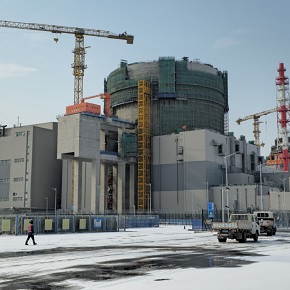
Rosatom provides first nuclear fuel shipment to Xudapu NPP The Fuel Division of Rosatom (managed by TVEL JSC) has successfully supplied the initial nuclear fuel loading for the VVER-1200 reactor at Unit 3 of the Xudapu NPP in Liaoning Province, Northeast China. INTERVIEW
Rosatom OPINION
CNNC |